New long-term findings presented at the 2026 ASCO Annual Meeting suggest that personalized mRNA cancer vaccines may become a promising future direction in oncology
New long-term findings presented at the 2026 ASCO Annual Meeting suggest that personalized mRNA cancer vaccines may become a promising future direction in oncology. In patients with high-risk melanoma who underwent surgery, the combination of Moderna’s individualized mRNA vaccine (intismeran autogene, formerly mRNA-4157/V940) with pembrolizumab (Keytruda) demonstrated durable clinical benefits over 5 years, including significant reductions in recurrence and distant metastasis risk. The data also reinforce the growing role of personalized immunotherapy strategies designed according to each patient’s tumor biology.
Durable Long-Term Clinical Benefit Observed After 5 Years
The phase 2b KEYNOTE-942 trial enrolled 157 patients with high-risk melanoma between 2019 and 2021 following surgical resection. Patients received either pembrolizumab alone or pembrolizumab combined with the personalized mRNA vaccine.
After 5 years of follow-up, the combination therapy demonstrated encouraging long-term outcomes:
-
49% reduction in the risk of recurrence or death
-
59% reduction in the risk of distant metastasis
-
Overall survival rate of 92.2% in the combination group versus 71.3% with pembrolizumab alone
Importantly, researchers noted that the benefit remained durable over time, consistent with earlier 3-year analyses reported in 2023.
According to investigators, these findings are clinically meaningful because they demonstrate improved efficacy over the current standard adjuvant therapy while maintaining a manageable safety profile. Notably, the addition of the vaccine did not increase immune-related adverse events (irAEs), which has historically been a concern with dual immunotherapy approaches.
How the Personalized mRNA Vaccine Works
Unlike preventive vaccines, cancer vaccines are therapeutic and are designed to stimulate the immune system against an existing tumor.
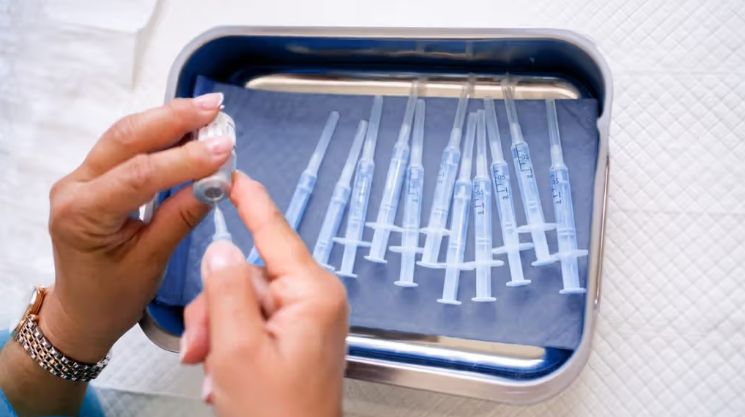
The investigational vaccine, intismeran autogene, is individually manufactured for each patient using genetic information obtained from the patient’s tumor tissue. Researchers identify tumor-specific mutations and create an mRNA vaccine encoding neoantigens — proteins uniquely expressed by cancer cells.
Once administered, the vaccine is intended to train the immune system to recognize and eliminate cells carrying these neoantigens.
The vaccine was used in combination with pembrolizumab, an anti-PD-1 checkpoint inhibitor that enhances T-cell activity by removing inhibitory immune “brakes.” Translational analyses from the study demonstrated increased T-cell clonality and generation of novel T-cell clones in the combination group, supporting a biologically meaningful immune response induced by the vaccine.
Investigators emphasized that this “tumor-informed” strategy represents a highly personalized immunotherapy approach that may offer more precise antitumor activity without substantially increasing toxicity.
Future Potential and Remaining Challenges
The findings add to growing evidence that personalized cancer vaccines could become an important component of future melanoma treatment strategies and potentially extend to other solid tumors.
A global phase 3 trial, INTerpath-001, evaluating intismeran autogene in melanoma has already completed enrollment. Additional studies are also ongoing in non-small-cell lung cancer, renal cell carcinoma, and bladder cancer.
Despite the promising efficacy signals, experts caution that several challenges remain before routine clinical implementation:
-
The current study population remains relatively small
-
Results have not yet been peer-reviewed or formally published
-
Personalized vaccine manufacturing is complex and time-intensive
-
Large-scale production and affordability will be critical considerations
Each vaccine dose must be custom-designed from an individual patient’s tumor sample, requiring coordination between pathology, genomic analysis, and manufacturing facilities. However, investigators stated that substantial progress has already been made in streamlining production workflows and expanding manufacturing capacity.
Overall, the 5-year data provide important proof-of-concept that personalized mRNA cancer vaccines may generate durable immune memory and long-term clinical benefit in melanoma, marking another significant step forward in precision oncology.
Source
Medicalnewstoday - Combination therapy sustains 49% melanoma reduction after 5 years