Updated AAP guidance broadens second-season RSV immunization for children aged 8–19 months with selected high-risk conditions, while continuing to prioritize protection during the first RSV season.
More High-Risk Children Eligible for Second-Season Protection
The American Academy of Pediatrics (AAP) has expanded its recommendations for respiratory syncytial virus (RSV) immunization to include more children entering their second RSV season.
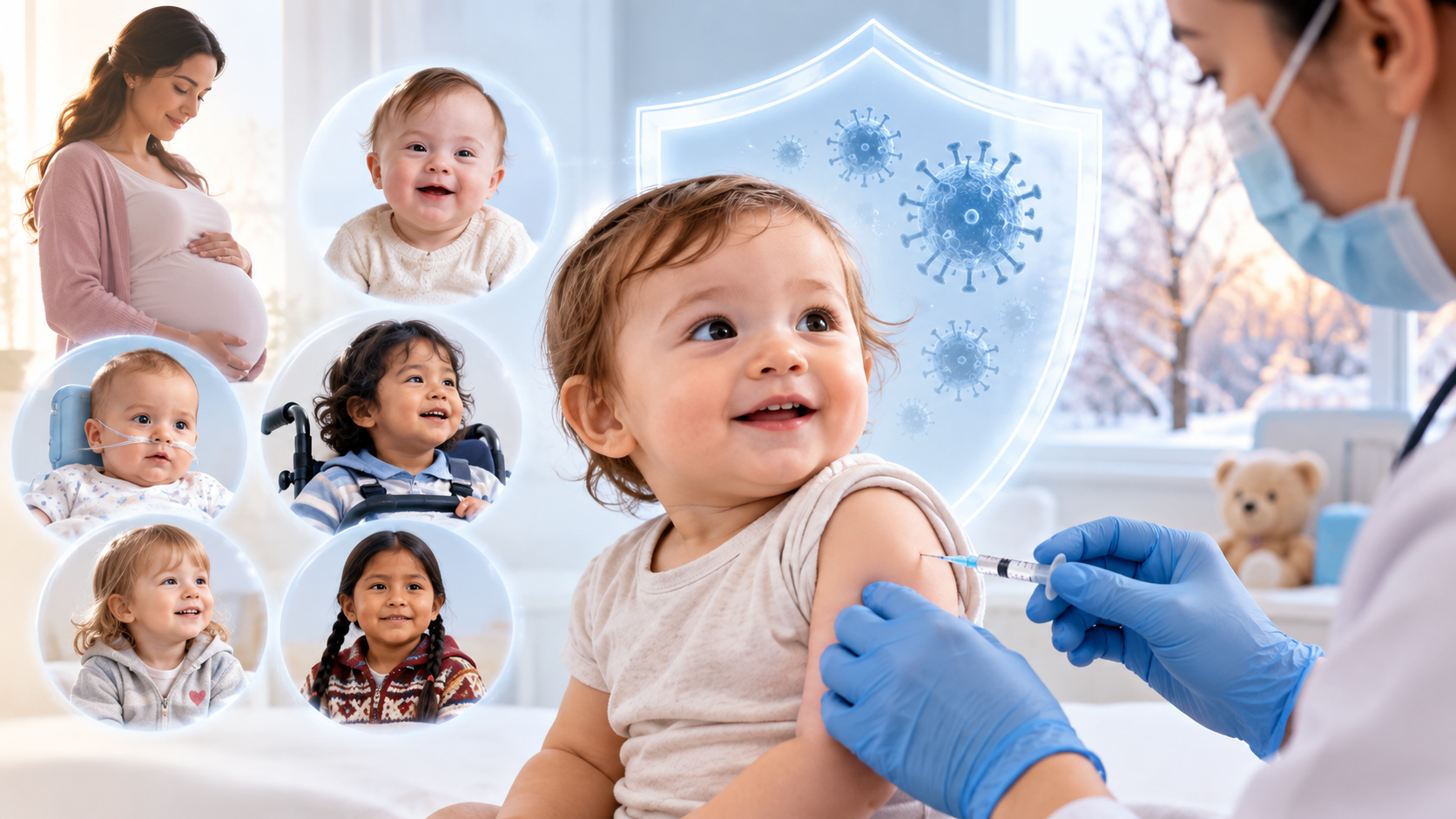
The updated guidance covers children aged 8 through 19 months with congenital heart disease, certain lung or neuromuscular conditions, Down syndrome, or chromosomal conditions associated with increased RSV risk. It also includes children born before 32 weeks of gestation who do not require ongoing medication or medical support.
Other eligible groups include children with certain forms of cystic fibrosis, chronic lung disease requiring recent medical support, and all Native American and Alaska Native children.
According to AAP President Andrew Racine, MD, PhD, high-risk children should receive a second dose regardless of whether their mother received an RSV vaccine during pregnancy or whether the child received RSV immunization during the first season.
The expanded recommendations reflect evidence that although RSV hospitalization risk generally decreases after the first year of life, some children remain at substantially higher risk. The AAP technical report found that children with chronic conditions affecting multiple respiratory, cardiovascular, or gastrointestinal systems had more than twice the hospitalization rate during their second RSV season compared with their first.
Maternal RSV Vaccination Window Extended
For the 2026–2027 respiratory virus season, the American College of Obstetricians and Gynecologists (ACOG) has also updated its recommendations by extending the maternal RSV vaccination window for ABRYSVO from September 1 through March 1, instead of ending January 31.
ACOG said the change reflects a shift in RSV circulation, with the season occurring later into spring.
Pregnant people should receive the vaccine between 32 and 36 weeks of gestation, provided delivery is not expected within two weeks. If maternal vaccination is not given, or if the infant is born within 14 days of vaccination, the newborn should receive an RSV monoclonal antibody.
First-Season RSV Protection Remains the Priority
Despite the expanded second-season recommendations, the AAP continues to emphasize protection during an infant’s first RSV season.
For infants entering their first season, the AAP recommends a monoclonal antibody unless the mother received an RSV vaccine during pregnancy.
An independent evidence review by the Vaccine Integrity Project reported that nirsevimab reduced the risk of RSV hospitalization by as much as 93%. The AAP technical report also noted that most infants hospitalized with RSV had no underlying high-risk medical condition.
Medical organizations emphasized that the updated recommendations are based on evolving evidence and changing RSV circulation patterns, while maintaining a strong focus on preventing severe disease in infants and vulnerable young children.
The American Academy of Pediatrics (AAP) has expanded its recommendations for respiratory syncytial virus (RSV) immunization to include more children entering their second RSV season.
The updated guidance covers children aged 8 through 19 months with congenital heart disease, certain lung or neuromuscular conditions, Down syndrome, or chromosomal conditions associated with increased RSV risk. It also includes children born before 32 weeks of gestation who do not require ongoing medication or medical support.
Other eligible groups include children with certain forms of cystic fibrosis, chronic lung disease requiring recent medical support, and all Native American and Alaska Native children.
According to AAP President Andrew Racine, MD, PhD, high-risk children should receive a second dose regardless of whether their mother received an RSV vaccine during pregnancy or whether the child received RSV immunization during the first season.
The expanded recommendations reflect evidence that although RSV hospitalization risk generally decreases after the first year of life, some children remain at substantially higher risk. The AAP technical report found that children with chronic conditions affecting multiple respiratory, cardiovascular, or gastrointestinal systems had more than twice the hospitalization rate during their second RSV season compared with their first.
Maternal RSV Vaccination Window Extended
For the 2026–2027 respiratory virus season, the American College of Obstetricians and Gynecologists (ACOG) has also updated its recommendations by extending the maternal RSV vaccination window for ABRYSVO from September 1 through March 1, instead of ending January 31.
ACOG said the change reflects a shift in RSV circulation, with the season occurring later into spring.
Pregnant people should receive the vaccine between 32 and 36 weeks of gestation, provided delivery is not expected within two weeks. If maternal vaccination is not given, or if the infant is born within 14 days of vaccination, the newborn should receive an RSV monoclonal antibody.
First-Season RSV Protection Remains the Priority
Despite the expanded second-season recommendations, the AAP continues to emphasize protection during an infant’s first RSV season.
For infants entering their first season, the AAP recommends a monoclonal antibody unless the mother received an RSV vaccine during pregnancy.
An independent evidence review by the Vaccine Integrity Project reported that nirsevimab reduced the risk of RSV hospitalization by as much as 93%. The AAP technical report also noted that most infants hospitalized with RSV had no underlying high-risk medical condition.
Medical organizations emphasized that the updated recommendations are based on evolving evidence and changing RSV circulation patterns, while maintaining a strong focus on preventing severe disease in infants and vulnerable young children.
Source:
Medscape